
Best Areas in Marbella for British Buyers
Marbella's best areas for British buyers range from the prestige of the Golden Mile and Sierra Blanca to family-friendly Marbella East and value-driven San Pedro de Alcantara. New-builds carry 10% IVA plus 1.2% AJD in Andalusia, resales 7% ITP, and UK owners are now taxed as non-EU residents at 24% via Modelo 210. After Brexit, Britons face the 90/180-day rule and need a visa to stay longer.
Choosing the best areas in Marbella for British buyers is as much about lifestyle and long-term costs as it is about the view. Marbella has drawn a large, established British community for decades, and the town offers everything from beachfront apartments to gated hillside villas. This guide walks through the neighbourhoods that suit UK buyers best, then sets out exactly what you will pay in tax when you purchase a new-build or resale home, and how the rules changed for Britons after Brexit. For the mechanics of the purchase itself, see our companion guides on the buying process step by step and on getting an NIE and opening a Spanish bank account.
Why Marbella works for British buyers
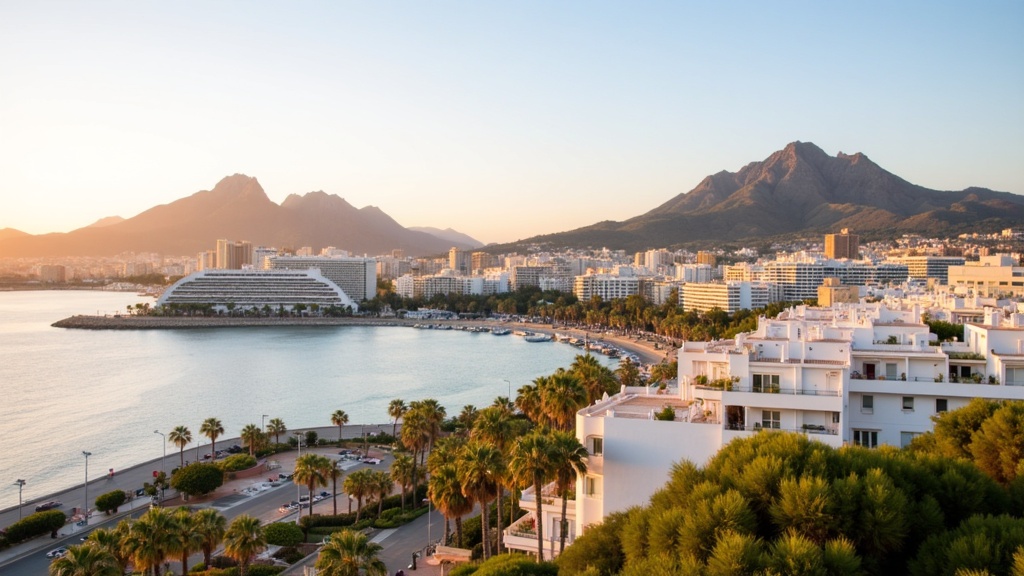
Marbella sits on the western Costa del Sol in Malaga province, with the Sierra Blanca mountains behind it and around 27 kilometres of coastline. The appeal for UK buyers is practical as well as aspirational: a mild climate year round, direct flights from most British airports into Malaga-Costa del Sol Airport, a deep pool of English-speaking professionals (lawyers, estate agents, doctors), and British-curriculum schools. The airport is roughly 50 kilometres east of Marbella, around 40 to 50 minutes by car via the AP-7 and A-7. 6
The best areas in Marbella for British buyers
Marbella is really a string of distinct districts spread along the coast, plus the neighbouring municipality of Benahavis inland. Where you buy should follow how you plan to use the home: full relocation, a holiday base, or a rental investment.
The Golden Mile and Sierra Blanca
The Golden Mile runs from Marbella town towards Puerto Banus and is the classic prestige address, lined with beachfront villas, gated developments and five-star hotels. Above it, Sierra Blanca and Cascada de Camojan are the town’s most exclusive gated enclaves, popular with buyers who want security, privacy and sea views close to the centre. Expect the highest prices per square metre in Marbella here, and buy as a resale or a boutique new-build rather than a volume development.
Puerto Banus and Nueva Andalucia
Puerto Banus is the marina district: apartments and penthouses within walking distance of restaurants, nightlife and the beach, which makes it a strong short-let rental proposition. Just behind it, Nueva Andalucia (the Golf Valley) is one of the most popular areas with British buyers who want space, golf on the doorstep and a quieter, more residential feel while staying minutes from the marina.
Marbella East (Elviria, Los Monteros, Las Chapas, Cabopino)
Marbella East is where many British families settle. Elviria, Los Monteros, Las Chapas and Cabopino offer some of the best beaches, a mix of villas and modern apartment complexes, good value relative to the Golden Mile, and easy access to international schools. This is the area to prioritise if schooling and everyday family life matter more than a marina postcode.
San Pedro de Alcantara and Guadalmina
San Pedro, immediately west of Puerto Banus, has transformed since its coastal boulevard was built over the motorway. It offers a genuine Spanish town feel, a promenade, and generally lower prices than central Marbella, which appeals to British buyers after a permanent home with local character. Adjacent Guadalmina adds established golf and villa living.
Benahavis and La Zagaleta
Strictly a separate municipality but universally grouped with Marbella, Benahavis is the inland hills option, home to La Zagaleta, one of Europe’s most exclusive gated estates. It suits buyers wanting large plots, mountain and sea views and maximum privacy, accepting a short drive to the beach in exchange.
What British buyers pay in purchase tax
The taxes on buying differ sharply between a brand-new home bought from a developer and a resale (second-hand) property. In Andalusia the headline rates are as follows. 12
| Cost | New-build (from developer) | Resale property |
|---|---|---|
| IVA (VAT) | 10% of the price 2 | Not applicable |
| AJD (stamp duty, Andalusia) | 1.2% of the price 1 | Not applicable |
| ITP (transfer tax, Andalusia) | Not applicable | 7% of the price 1 |
| Notary, Land Registry, legal | Roughly 2% to 3% combined | Roughly 2% to 3% combined |
In short, a new-build in Marbella typically carries about 11.2% in tax (10% IVA plus 1.2% AJD), while a resale carries 7% ITP. 12 On top of either, budget around 2% to 3% for notary fees, Land Registry inscription, your independent lawyer and, if you use one, a mortgage. Always retain your own English-speaking Spanish lawyer (abogado) who is independent of the seller and agent, and never sign a reservation contract without a NIE application under way.
Ongoing taxes for non-resident owners
Once you own a Marbella property but remain UK tax-resident, you are a non-resident owner in Spain and file the Modelo 210 form for Impuesto sobre la Renta de no Residentes (IRNR). Since Brexit, UK nationals are treated as non-EU residents, which changes the rate and the deductions. 25
- If you do not rent the property out, Spain still charges tax on a notional (imputed) income. The taxable base is 1.1% of the cadastral value (or 2% where the value has not been revised recently), taxed at the non-resident rate of 24% for UK owners. That works out at roughly 0.26% of the cadastral value per year. 2
- If you let the property, rental income is taxed at 24% for non-EU residents such as Britons, and, crucially, non-EU owners cannot deduct expenses such as mortgage interest, community fees or repairs. EU and EEA residents pay 19% and can deduct expenses, so Brexit made letting less tax-efficient for UK owners. 2
- IBI (Impuesto sobre Bienes Inmuebles) is the annual local property tax set by Marbella town hall, calculated on the cadastral value; rates across Spain generally sit between about 0.4% and 1.1% of that value. 7
- Rubbish collection (basura) and community of owners fees are additional annual costs, the latter varying widely with the development’s facilities.
When you later sell, capital gains are taxed at 19% for non-residents, and the buyer must withhold 3% of the sale price and pay it to the tax office via Modelo 211 as an advance against your gain. 23 You reclaim any excess through your own Modelo 210 filing. Sellers also pay plusvalia municipal, the local tax on the increase in land value.
Mortgages, visas and residency after Brexit
UK buyers can still get a Spanish mortgage, but non-residents are typically lent up to 60% to 70% of the purchase or valuation price (whichever is lower), so plan for a deposit of at least 30% plus all the taxes and fees above. Lenders assess income and existing debt, and rates and terms differ from UK products.
On residency, Brexit is the big change. UK nationals are now third-country nationals in the Schengen area and can spend a maximum of 90 days in any rolling 180-day period in Spain without a visa. 5 Owning a Marbella home does not extend that allowance. To stay longer you need a residence route such as the non-lucrative visa (for those with sufficient passive income who will not work) or the digital nomad visa introduced under Spain’s startups law. Note that the investor residence permit, widely known as the golden visa, which allowed residency through a property purchase of 500,000 euros, was abolished and stopped accepting real estate applications from 3 April 2025, so buying property is no longer a route to Spanish residency. 4
The UK and Spain have a double taxation convention, so income and gains are not taxed twice: you declare Spanish-source income in Spain and claim relief in the UK, and vice versa. 8 Take coordinated cross-border tax advice before you buy, because becoming Spanish tax-resident (spending more than 183 days a year in Spain, among other tests) brings worldwide income into scope and can trigger wealth tax obligations in Andalusia.
Schools, healthcare and daily life
For relocating families, Marbella and the surrounding coast have several long-established British-curriculum and international schools clustered mainly around Nueva Andalucia, San Pedro and Marbella East, which is one reason those areas dominate British family demand. On healthcare, UK state pensioners can often register for Spanish public healthcare using the S1 form, short visits are covered by the UK Global Health Insurance Card (GHIC), and most residents and second-home owners take out private Spanish health insurance for speed and English-speaking care. 5
Whichever area you choose, the pattern for British buyers is consistent: resale purchases carry less upfront tax than new-builds, non-resident status since Brexit means a 24% IRNR rate and no expense deductions on rentals, and residency now requires a visa rather than a property purchase. Line those numbers up before you fall for the view. For more detail, read our guides on the full buying process, non-resident tax and Modelo 210, and residency and visa options for UK buyers.
Frequently asked questions
How much tax will I pay buying a property in Marbella?
Can British citizens still buy property in Marbella after Brexit?
Does buying a home in Marbella give me Spanish residency?
What ongoing taxes do non-resident owners pay in Marbella?
If you do not rent out, Spain taxes an imputed income (1.1% or 2% of the cadastral value, taxed at 24% for UK owners) via Modelo 210, roughly 0.26% of the cadastral value a year. Rental income is taxed at 24% with no expense deductions. You also pay annual IBI local property tax to Marbella town hall. 27
Which areas of Marbella are most popular with British buyers?
The Golden Mile and Sierra Blanca lead for prestige and security, Puerto Banus and Nueva Andalucia for marina living and golf, Marbella East (Elviria, Los Monteros, Las Chapas) for families and beaches, and San Pedro de Alcantara for value and a Spanish-town feel. Benahavis and La Zagaleta suit buyers wanting inland privacy.
How far is Marbella from the airport?
Malaga-Costa del Sol Airport is roughly 50 kilometres east of Marbella, about 40 to 50 minutes by car via the AP-7 and A-7 motorways, with frequent direct flights from UK airports. 6