
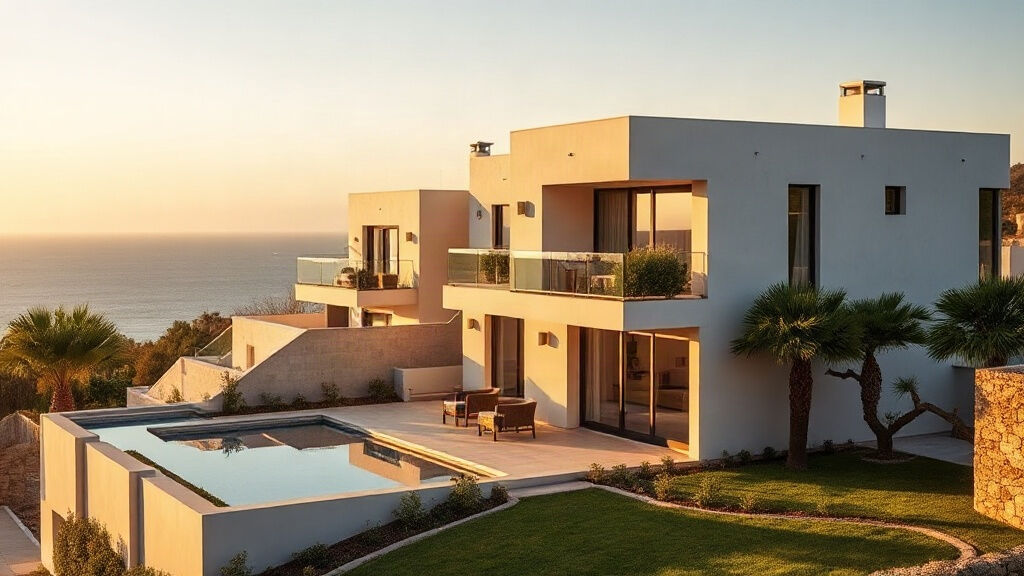
International Schools and Family Life for New-Build Owners in Estepona for German Families
German families looking to purchase a new-build property in Estepona will find a welcoming environment with excellent international schooling options and a high quality of life. This guide details essential information on finding the right school, understanding Spanish property taxes and legalities, and navigating the relocation process for a smooth transition to the Costa del Sol.
International Schools and Family Life for New-Build Owners in Estepona for German Families
Estepona, a charming gem on Spain’s Costa del Sol, is increasingly attracting German families seeking a harmonious blend of sunny climate, excellent amenities, and a high quality of life. For those considering the purchase of a new-build property, the appeal is even greater, promising modern comforts and sustainable living. Life in Costa, a guide and directory that recommends and markets new-build homes on behalf of developers, understands the unique considerations for international buyers. This guide is tailored specifically for German families, focusing on education, family integration, and the crucial financial and legal aspects of acquiring a new-build home in Estepona.
Why Estepona Appeals to German Families
Estepona boasts a vibrant international community, while still retaining its authentic Andalusian charm. The town offers beautiful beaches, a picturesque marina, and a thriving old town, creating a relaxed yet engaging atmosphere. For families, access to nature, sports facilities, and a generally safe environment are significant draws. The excellent connectivity, with Malaga Airport just under an hour away, ensures easy travel to and from Germany, facilitating visits from relatives and maintaining cultural ties.
New-Build Properties on the Costa del Sol
Investing in a new-build (obra nueva) property on the Costa del Sol, particularly in areas like Estepona, offers numerous advantages for foreign buyers.
- Modern Design and Amenities: Developments we recommend typically feature contemporary architecture, open-plan living spaces, and high-quality finishes, designed for comfort and efficiency.
- Energy Efficiency: Modern construction standards mean better insulation, energy-efficient appliances, and often renewable energy systems, leading to lower utility bills and a reduced environmental footprint.
- Warranties and Guarantees: New-build homes come with statutory guarantees from the developer, providing peace of mind regarding structural integrity and finishes.
- Customisation Potential: Purchasing off-plan (before construction is complete) can sometimes offer opportunities for customising finishes and layouts to suit personal preferences.
The process of buying off-plan involves staged payments linked to construction milestones, with a bank guarantee (aval bancario) protecting payments made before completion, safeguarding your investment.
International Schools for German Families in Estepona
Education is a primary concern for families relocating abroad. Estepona and its surrounding areas offer several highly-regarded international schools, providing diverse curricula that can ease the transition for German children.
- German Curriculum Options: For families prioritising a direct continuation of the German education system, the German School of Malaga (Deutsche Schule Málaga – DSM) is a prominent choice. Located near Marbella, it offers a comprehensive German curriculum, promoting both academic excellence and cultural exchange within the German-speaking community.
- British and International Baccalaureate Options: Many international schools in the region follow the British curriculum or offer the International Baccalaureate (IB) Diploma Programme, recognised globally and often a good pathway for university applications worldwide. The International School of Estepona provides a British curriculum for children aged 2 to 12. The highly-rated Colegio San José, with campuses in Estepona and Guadalmina, is a bilingual (English-Spanish) school that also offers German language instruction and preparation for Goethe Institut exams, alongside the IB Diploma Programme. Other notable international schools in the wider Marbella area (easily accessible from Estepona) include Aloha College, Laude San Pedro International College, and Swans International School, many offering English as the primary language of instruction alongside Spanish, and often German as a third language option.
When considering admissions, it is advisable to contact schools well in advance, as places can be competitive. Most schools will require academic records, a possible entrance examination, and an interview.
Family Life and Community in Estepona
Estepona offers a lifestyle that balances traditional Spanish culture with modern amenities, making it ideal for families.
- Healthcare: Spain has a national healthcare system, but many expatriate families opt for private health insurance for faster access to specialists and a wider choice of English-speaking medical professionals. There are numerous private clinics and hospitals along the Costa del Sol.
- Leisure and Activities: Beyond the beaches, Estepona provides numerous parks, sports clubs, and cultural activities. The ‘Orchidarium’ botanical garden and the Selwo Aventura wildlife park are popular family attractions. The surrounding mountains offer opportunities for hiking and exploring.
- Connecting with the German Community: Estepona and the broader Costa del Sol have a significant German expatriate community. Various clubs, associations, and social groups facilitate networking and help new arrivals settle in and maintain cultural connections.
Essential Financial & Legal Considerations for German Buyers of New-Builds
Navigating the financial and legal landscape of property purchase in a new country requires careful attention. Here’s what German buyers of new-build properties in Estepona need to know.
The NIE Number: Your Key to Spain
The Número de Identificación de Extranjero (NIE) is a mandatory identification number for any foreigner wishing to undertake economic, professional, or social activities in Spain, including buying property, opening a bank account, or signing utility contracts. You can apply for an NIE in Spain at a National Police Station (Oficina de Extranjería) or through a Spanish Consulate in Germany. The application typically requires form EX-15 and payment of a small fee.
Property Purchase Taxes for New-Builds
When purchasing a new-build property directly from a developer in Andalusia, the following taxes apply:
- IVA (Impuesto sobre el Valor Añadido – Value Added Tax): This is the most significant tax for new-builds, set at 10% of the purchase price. This rate applies to the first transmission of the property from the developer.
- AJD (Impuesto sobre Actos Jurídicos Documentados – Stamp Duty): In Andalusia, the general rate for AJD on new-build properties is 1.2% of the purchase price. This tax is levied on public deeds (escrituras públicas) that are registered in the Property Registry.
Annual Property Ownership Taxes
Once you own a property in Estepona, you will be subject to annual taxes:
- IBI (Impuesto sobre Bienes Inmuebles – Local Property Tax): This is a municipal tax, similar to council tax, paid annually to the local town hall. It is calculated based on the cadastral value (valor catastral) of the property, which is an administrative value. Rates typically range between 0.4% and 1.1% for urban properties, varying by municipality. The owner on January 1st of each year is liable for the full annual IBI.
- IRNR (Impuesto sobre la Renta de No Residentes – Non-Resident Income Tax): German non-residents owning property in Spain are liable for IRNR. Even if the property is not rented out, a deemed rental income (imputed income) must be declared. This is typically calculated as 2% of the cadastral value (or 1.1% if the cadastral value has been updated within the last 10 years). For residents of the EU/EEA (which includes Germany), the tax rate on this imputed income, or on actual rental income, is 19%. If the property is rented, EU/EEA residents can deduct certain expenses, unlike non-EU residents. The Modelo 210 form is used for this declaration. As of 2024, the process for declaring rental income has been simplified to a single annual declaration instead of quarterly submissions, reducing administrative burden.
- Wealth Tax (Impuesto sobre el Patrimonio): Non-residents are subject to Spanish Wealth Tax on their assets located in Spain. This applies if the net value of their Spanish assets exceeds the national tax-free allowance, which is generally 700,000 euros. The tax rates are progressive and can vary by autonomous community; however, for non-residents, the state rules typically apply unless a specific regional rule dictates otherwise.
Financing Your New-Build: Mortgages
Spanish banks offer mortgages to non-residents, typically providing a Loan-to-Value (LTV) ratio of around 60% to 70% of the property’s purchase price or valuation (whichever is lower). This means German buyers should anticipate needing a down payment of 30-40% plus an additional 10-15% to cover purchase taxes and fees. A Spanish bank will require proof of income and a good credit history from your home country.
Residency and Visa Options (Golden Visa)
As German citizens, you benefit from freedom of movement within the EU. However, for non-EU family members or for those seeking a more formal residency status linked to investment, Spain offers the Golden Visa programme. An investment of at least 500,000 euros in real estate qualifies non-EU citizens for residency in Spain, extendable to their immediate family. This visa allows travel within the Schengen area.
Avoiding Double Taxation: Germany-Spain DTT
Spain and Germany have a Double Taxation Treaty (DTT) in place, effective since 2013, designed to prevent individuals from being taxed twice on the same income or assets. This treaty clarifies which country has the right to tax different types of income. For instance, income from Spanish property can be taxed in both countries, but Germany will provide a credit or exemption to avoid double taxation. However, German tax law applies the ‘Progressionsvorbehalt’ (progression clause), meaning that even if Spanish income is exempt from German tax, it is still considered when determining the applicable tax rate for other income taxable in Germany. It is highly advisable to seek specialist tax advice both in Spain and Germany to understand your specific obligations.
Relocation Practicalities
Beyond property and taxes, practical aspects of relocation include registering with the local town hall (Ayuntamiento) for public services, converting driving licences (if applicable), and setting up utilities. Opening a Spanish bank account is essential for managing local expenses and property-related payments.
Estepona offers German families a fantastic opportunity to embrace a new lifestyle within a supportive international community. With careful planning and expert guidance on new-build property acquisition and related legalities, your move to the Costa del Sol can be a seamless and rewarding experience.
Frequently asked questions
What is the main advantage of buying a new-build property in Estepona for German families?
New-build properties offer modern design, high energy efficiency, and statutory guarantees, providing peace of mind and lower running costs. They are also often located in new developments with shared amenities like pools and gardens.
Are there German-speaking international schools in Estepona?
Yes, while not directly in Estepona, the German School of Malaga (DSM) offers a full German curriculum and is accessible from Estepona. Additionally, some international schools in the area, like Colegio San José, offer German as a foreign language and prepare students for Goethe Institut exams.
What are the primary taxes on a new-build property purchase in Estepona for a German buyer?
For new-build properties, German buyers will pay 10% IVA (Value Added Tax) on the purchase price and 1.2% AJD (Stamp Duty) in Andalusia. These are paid at the time of purchase.
Do German owners of new-builds in Estepona have to pay annual taxes?
Yes, annual taxes include IBI (local property tax) based on the cadastral value, and IRNR (Non-Resident Income Tax). Even if the property is not rented, a deemed rental income must be declared for IRNR, taxed at 19% for EU residents.
Is the NIE number essential for German property buyers?
Yes, the NIE (Número de Identificación de Extranjero) is a mandatory identification number required for all economic, professional, or social activities in Spain, including purchasing property and opening bank accounts. It is one of the first steps you need to take.
How does the Germany-Spain Double Taxation Treaty affect German property owners in Estepona?
The Double Taxation Treaty prevents you from being taxed twice on the same income or assets. While income from Spanish property can be taxed in both countries, Germany provides a credit or exemption. However, Germany's 'Progressionsvorbehalt' means Spanish income influences the tax rate applied to your other German-taxable income.