
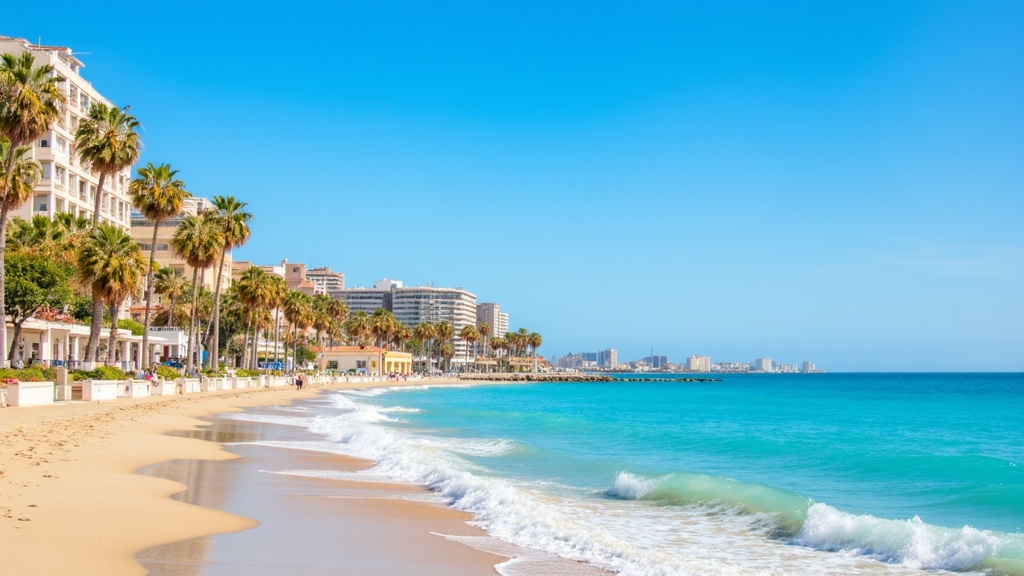
Weather and Climate on the Costa del Sol, Season by Season
The Costa del Sol has a warm Mediterranean climate with a mean annual temperature around 18.5C, roughly 2,900 hours of sunshine and about 530mm of rain a year, most of it between October and March. Summers are hot and reliably dry, winters are mild, and swimmable sea weather runs from roughly June to October.
Understanding the weather and climate on the Costa del Sol is one of the first things most foreign buyers look into, and for good reason: the sunshine is the single biggest reason people relocate here. The coast, running along the province of Malaga in Andalusia, enjoys a warm Mediterranean climate sheltered to the north by mountain ranges. Malaga Airport records a mean annual temperature of about 18.5C, with roughly 2,905 hours of sunshine and around 534mm of rain a year concentrated in the cooler months.1 This guide walks through the Costa del Sol climate season by season so you know what to expect whether you plan to live here year round or use a home seasonally.
The Costa del Sol climate in numbers
The figures below come from AEMET, the Spanish state meteorological agency, for the Malaga Airport reference station, alongside widely used regional climate summaries. They give a reliable baseline for the western and central coast; conditions shift a little from Manilva in the west to Nerja in the east.
| Indicator | Value | Notes |
|---|---|---|
| Mean annual temperature | 18.5C | Malaga Airport, AEMET1 |
| Mean annual maximum | 23.3C | Daytime average across the year1 |
| Mean annual minimum | 13.7C | Night-time average across the year1 |
| January mean | 12.1C | Coldest month1 |
| August mean | 26.0C | Warmest month1 |
| Annual rainfall | about 534mm | Mostly October to March1 |
| Annual sunshine | about 2,905 hours | Roughly 8 hours a day on average1 |
January 12 C Annual average 19 C August 26 C
You will often read that the Costa del Sol has 320 days of sunshine a year. Treat this as marketing shorthand rather than a meteorological measurement: the coast genuinely receives close to 3,000 hours of sun, but the count of fully cloudless days is lower once partly cloudy days are separated out.3
Spring on the Costa del Sol (March to May)
Spring is one of the most pleasant seasons for visiting or house-hunting. Days lengthen quickly, the countryside is green and daytime highs climb from the high teens in March to the mid-twenties by May, occasionally touching 30C in a warm spell.2 Rain becomes infrequent as the season progresses. The sea is still cool for swimming, warming only slowly from its late-winter low, so spring suits walking, golf and viewing properties better than beach days. It is also a quieter, cheaper time to travel before the summer peak.
Summer on the Costa del Sol (June to September)
Summer is hot, sunny and reliably dry. Daytime averages sit around 28C in June and September and climb to roughly 30C to 31C in July and August, with peaks well above that during heatwaves.2 Rain is very rare in these months, and humidity near the coast is moderated by sea breezes. This is when the resorts are busiest and when buyers see the lifestyle at its most vivid, though it is also the season of highest prices and strongest demand. Inland and away from the breeze the heat feels more intense, which is worth remembering if you are comparing coastal and hillside homes. If you are weighing a permanent move, our lifestyle and cost of living guides pair naturally with this section.
Autumn on the Costa del Sol (September to November)
Early autumn is arguably the sweet spot of the year: the sea is at its warmest after a summer of heating, the air is still hot in September and eases to comfortable highs through October and November.2 The first significant rains usually arrive in October and November, sometimes as short, heavy downpours rather than persistent drizzle. Swimming remains comfortable well into October. For buyers this is a productive season, with warm weather, thinner crowds and a clear view of how a property copes with the first rain of the year.
Winter on the Costa del Sol (December to February)
Winters are mild by northern European standards and are a large part of the region’s appeal to retirees and remote workers. January is the coldest month with a mean around 12C, daytime highs often reaching 17C to 20C in sunny weather while nights drop into single figures.12 Most of the year’s rain falls in this period, but between fronts there are long runs of clear, bright days. Frost is essentially unknown on the coast, though it can occur inland and the mountains behind Marbella and Granada hold snow. Homes here are built for heat rather than cold, so check heating, insulation and damp when viewing in winter; this connects with the topics covered in our buying process and property surveys guides.
Sea temperatures season by season
The Mediterranean here lags the air temperature, warming and cooling more slowly. Water is coolest in late winter, around 15C to 16C in January and February, and warmest in August at roughly 22C to 23C off Marbella and Malaga.4 Comfortable swimming for most visitors runs from about June to October, with September often the single best month because the sea has banked a whole summer of warmth.
| Season | Approx. sea temperature |
|---|---|
| Winter (Dec to Feb) | 15C to 16C4 |
| Spring (Mar to May) | 16C to 18C4 |
| Summer (Jun to Sep) | 20C to 23C4 |
| Autumn (Sep to Nov) | 18C to 21C4 |
The winds: levante, poniente and terral
Three named winds shape day-to-day conditions on the Costa del Sol, and locals plan around them. The levante blows from the east off the Mediterranean and tends to be humid in summer and can whip up the sea. The poniente comes from the west and the Atlantic, typically cooler and fresher, clearing the air.5 The terral is the one buyers should know about: a dry wind descending from the interior that in summer can push Malaga’s temperature up sharply for a day or two, and in winter arrives dry and cold.5 Its effect is strongest in Malaga city and eases along parts of the coast that sit more open to the sea breeze.
Microclimates along the coast
The Costa del Sol is not a single climate but a string of microclimates created by the coastline and the mountains behind it. The stretch around Marbella, sheltered by the La Concha massif, is known for being a touch milder and better protected than exposed points. To the east, the area around Torrox, Nerja and Almunecar is frequently cited for its gentle, stable climate.5 These local differences are modest but real, and they are worth factoring in alongside orientation, altitude and proximity to the sea when you compare specific towns. Our area and town guides go into how these pockets differ.
What the climate means for buyers
For most foreign buyers the practical takeaways are simple. The Costa del Sol offers year-round outdoor living, a genuine winter season that supports permanent residence rather than just summer use, and enough rain in the cooler months that gardens and reservoirs are not purely dependent on irrigation. When choosing a home, weigh summer heat management (shade, cross-ventilation, air conditioning and pool orientation) against winter comfort (heating and insulation, which older Spanish builds often lack). Visiting in more than one season, ideally including a winter viewing, is the best way to judge how a property and its location actually feel across the year. Pair this climate overview with our guides on residency and visas, taxes for non-residents and the day-to-day cost of living to build a complete picture before you buy.
Frequently asked questions
How many days of sunshine does the Costa del Sol really get?
AEMET records roughly 2,905 hours of sunshine a year at Malaga Airport, an average of about 8 hours a day. The popular figure of 320 sunny days is marketing shorthand: the number of fully cloudless days is lower once partly cloudy days are counted separately, though the coast is genuinely one of the sunniest parts of Europe.13
What is the average temperature on the Costa del Sol?
The mean annual temperature at Malaga Airport is about 18.5C, with an average daytime high of 23.3C and an average night-time low of 13.7C. January is the coldest month at around 12C and August the warmest at around 26C.1
When can you swim in the sea on the Costa del Sol?
Comfortable sea swimming generally runs from about June to October. Water is coolest in late winter at around 15C to 16C and warmest in August at roughly 22C to 23C. September is often the best month because the sea retains a full summer of warmth.4
Does it rain much on the Costa del Sol?
What is the terral wind?
The terral is a dry wind that descends from the interior. In summer it can send Malaga's temperature up sharply for a day or two, while in winter it arrives dry and cold. Its effect is strongest in Malaga city and milder along coastal stretches that stay open to the sea breeze.5
Which part of the Costa del Sol has the best climate?
Differences are modest, but the sheltered area around Marbella and the eastern stretch around Torrox, Nerja and Almunecar are frequently cited for their gentle, stable microclimates. Orientation, altitude and distance from the sea matter as much as the town name.5